 Image 1 of 1
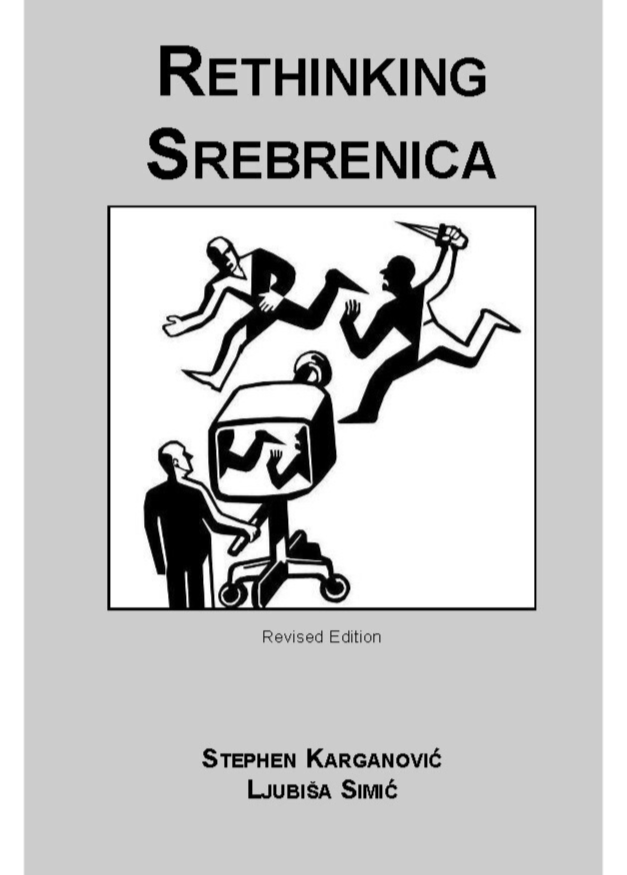
Rethinking Srebrenica, by Stephen Karganović and Ljubiša Simić
378 pages
ISBN: 978-1737409-0-8
Weight: 1 pound
Rethinking Srebrenica presents an irrefutable body of research that exposes the Srebrenica “narrative” as largely a legal and factual fiction that has been used to advance U.S. and E.U. political goals in Serbia and the Balkans, as well as to rationalize aggressive wars worldwide, using the pretext of “humanitarian intervention.”
Rethinking Srebrenica is a holistic examination of the events that took place in Srebrenica during 1992-1995, which includes: the killing of more than 3,000 Serbian civilians in the Srebrenica area; the refusal of Muslim forces to honor disarmament agreements; and the UN’s reluctance to enforce these agreements. Furthermore, Rethinking Srebrenica refutes the claim that “8,000 men and boys” were killed in Srebrenica by making a comprehensive review of The Hague Tribunal’s (ICTY’s) own evidence in the case. The authors conclude that about 950 Muslim soldiers were killed during the taking of Srebrenica, of which about 400 had been executed, as evidenced by ligatures and blindfolds found during exhumations. These executions were certainly a war crime, but by no means a “genocide.”
Rethinking Srebrenica also demystifies the media manipulation that took place in creating the figure of “8,000 victims.” For instance, the authors discovered that The International Commission for Missing Persons in the Former Yugoslavia (ICMP), the agency that performed the DNA testing to identify the alleged victims, had never been issued professional certification by Gednap, the international agency that regulates DNA testing laboratories. The authors also examine the contradictory and unreliable evidence presented by The Hague’s star witness, Dražen Erdemović. And the authors exposed the alleged satellite photos of the massacre to be a fraud, as well as the alleged radio intercepts that were used as evidence against the Bosnian Serbs.
CONTENTS
Introduction
I. Srebrenica: A Critical Overview
II. Demilitarization of the UN Safe Zone of Srebrenica
III. Genocide or Blowback?
IV. General Presentation and Interpretation of Srebrenica Forensic Data (Pattern of Injury Breakdown)
V. An Analysis of the Srebrenica Reports Prepared by ICTY Prosecution Experts
VI. An Analysis of Muslim Column Losses Attributable to Minefields, Combat Activity, and Other Causes
VII. The Genocide Issue: Was there a Demonstrable Intent to Exterminate All Muslims?
VIII. ICTY Radio Intercept Evidence
IX. The Balance Sheet
Review
A painstakingly meticulous, unconventional analysis of the purported 1995 genocide that took place in Srebrenica.
Originally published under the title Deconstruction of a Virtual Genocide (2013), this impressively rigorous reconsideration challenges the conventional wisdom regarding the devastation in Bosnia and Herzegovina. The two authors one a medical doctor who exhaustively assessed all the germane forensic evidence, the other a man who played a part as a defense attorney in the judicial aftermath of the Srebrenica incident call for a more holistic approach to the event, one that considers the three days of killing within the context of three years of war. They also scour allegedly expert testimony and eyewitness accounts, impugning their credibility. The principal, and shocking, conclusion the authors draw is that genocide, in the strictest sense of the charge, never did occur, though they do concede that war crimes were committed, specifically numerous executions. The attention and vast logistical resources invested in propping up this misleading narrative could have been more effectively used to conduct a proper investigation, they write. In fact, the authors argue that the preceding three years had been riddled by war crimes, even pogroms, committed by Muslim combatants, systematically neglected and even covered up by global media, major governments and a slew of international institutions infected by bias. Further, they contend that such wholesale misrepresentation of the facts only stymies the possibility of future harmony between Orthodox and Muslim communities. Written in often dense prose characteristic of academic literature, this isn t light fare, and its provocative claims are sure to stir the scholarly pot.
For those who enjoy a tireless, detailed account of controversial historical events, this is an excellent find.—Kirkus Review
About the Author
Stephen Karganović played integral roles in the teams of defense attorneys at the ICTY in The Hague (2001–2008) that Defended Dragan Obrenović (Chief of Staff of the Zvornik Brigade in the Army of the Republika Srpska); Jovica Stanišić (the former Chief of the Serbian State Security Service); and Momčilo Krajišnik (Speaker of the Nationial Assembly in the Republika Srpska). Stephen Karganović has been the President of the NGO, The Srebrenica Historical Project, since 2008. Dr. Ljubiša Simić is a medical doctor who had full access to the Prosecution’s forensic evidence that was presented in The Hague Tribunal in relation to the alleged “Srebrenica Massacre.”
378 pages
ISBN: 978-1737409-0-8
Weight: 1 pound
Rethinking Srebrenica presents an irrefutable body of research that exposes the Srebrenica “narrative” as largely a legal and factual fiction that has been used to advance U.S. and E.U. political goals in Serbia and the Balkans, as well as to rationalize aggressive wars worldwide, using the pretext of “humanitarian intervention.”
Rethinking Srebrenica is a holistic examination of the events that took place in Srebrenica during 1992-1995, which includes: the killing of more than 3,000 Serbian civilians in the Srebrenica area; the refusal of Muslim forces to honor disarmament agreements; and the UN’s reluctance to enforce these agreements. Furthermore, Rethinking Srebrenica refutes the claim that “8,000 men and boys” were killed in Srebrenica by making a comprehensive review of The Hague Tribunal’s (ICTY’s) own evidence in the case. The authors conclude that about 950 Muslim soldiers were killed during the taking of Srebrenica, of which about 400 had been executed, as evidenced by ligatures and blindfolds found during exhumations. These executions were certainly a war crime, but by no means a “genocide.”
Rethinking Srebrenica also demystifies the media manipulation that took place in creating the figure of “8,000 victims.” For instance, the authors discovered that The International Commission for Missing Persons in the Former Yugoslavia (ICMP), the agency that performed the DNA testing to identify the alleged victims, had never been issued professional certification by Gednap, the international agency that regulates DNA testing laboratories. The authors also examine the contradictory and unreliable evidence presented by The Hague’s star witness, Dražen Erdemović. And the authors exposed the alleged satellite photos of the massacre to be a fraud, as well as the alleged radio intercepts that were used as evidence against the Bosnian Serbs.
CONTENTS
Introduction
I. Srebrenica: A Critical Overview
II. Demilitarization of the UN Safe Zone of Srebrenica
III. Genocide or Blowback?
IV. General Presentation and Interpretation of Srebrenica Forensic Data (Pattern of Injury Breakdown)
V. An Analysis of the Srebrenica Reports Prepared by ICTY Prosecution Experts
VI. An Analysis of Muslim Column Losses Attributable to Minefields, Combat Activity, and Other Causes
VII. The Genocide Issue: Was there a Demonstrable Intent to Exterminate All Muslims?
VIII. ICTY Radio Intercept Evidence
IX. The Balance Sheet
Review
A painstakingly meticulous, unconventional analysis of the purported 1995 genocide that took place in Srebrenica.
Originally published under the title Deconstruction of a Virtual Genocide (2013), this impressively rigorous reconsideration challenges the conventional wisdom regarding the devastation in Bosnia and Herzegovina. The two authors one a medical doctor who exhaustively assessed all the germane forensic evidence, the other a man who played a part as a defense attorney in the judicial aftermath of the Srebrenica incident call for a more holistic approach to the event, one that considers the three days of killing within the context of three years of war. They also scour allegedly expert testimony and eyewitness accounts, impugning their credibility. The principal, and shocking, conclusion the authors draw is that genocide, in the strictest sense of the charge, never did occur, though they do concede that war crimes were committed, specifically numerous executions. The attention and vast logistical resources invested in propping up this misleading narrative could have been more effectively used to conduct a proper investigation, they write. In fact, the authors argue that the preceding three years had been riddled by war crimes, even pogroms, committed by Muslim combatants, systematically neglected and even covered up by global media, major governments and a slew of international institutions infected by bias. Further, they contend that such wholesale misrepresentation of the facts only stymies the possibility of future harmony between Orthodox and Muslim communities. Written in often dense prose characteristic of academic literature, this isn t light fare, and its provocative claims are sure to stir the scholarly pot.
For those who enjoy a tireless, detailed account of controversial historical events, this is an excellent find.—Kirkus Review
About the Author
Stephen Karganović played integral roles in the teams of defense attorneys at the ICTY in The Hague (2001–2008) that Defended Dragan Obrenović (Chief of Staff of the Zvornik Brigade in the Army of the Republika Srpska); Jovica Stanišić (the former Chief of the Serbian State Security Service); and Momčilo Krajišnik (Speaker of the Nationial Assembly in the Republika Srpska). Stephen Karganović has been the President of the NGO, The Srebrenica Historical Project, since 2008. Dr. Ljubiša Simić is a medical doctor who had full access to the Prosecution’s forensic evidence that was presented in The Hague Tribunal in relation to the alleged “Srebrenica Massacre.”