Unwritten History
Devoted to recent Serbian history
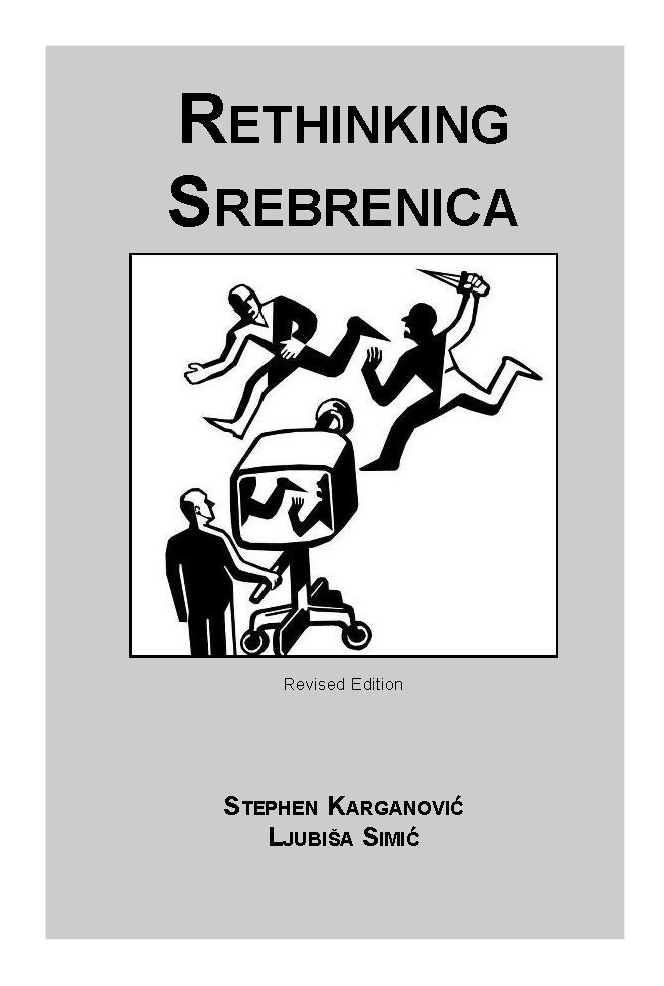
378 pages
ISBN: 978-1737409-0-8
Weight: 1 pound
Rethinking Srebrenica presents an irrefutable body of research that exposes the Srebrenica “narrative” as largely a legal and factual fiction that has been used to advance U.S. and E.U. political goals in Serbia and the Balkans, as well as to rationalize aggressive wars worldwide, using the pretext of “humanitarian intervention.”
Rethinking Srebrenica is a holistic examination of the events that took place in Srebrenica during 1992-1995, which includes: the killing of more than 3,000 Serbian civilians in the Srebrenica area; the refusal of Muslim forces to honor disarmament agreements; and the UN’s reluctance to enforce these agreements. Furthermore, Rethinking Srebrenica refutes the claim that “8,000 men and boys” were killed in Srebrenica by making a comprehensive review of The Hague Tribunal’s (ICTY’s) own evidence in the case. The authors conclude that about 950 Muslim soldiers were killed during the taking of Srebrenica, of which about 400 had been executed, as evidenced by ligatures and blindfolds found during exhumations. These executions were certainly a war crime, but by no means a “genocide.”
Rethinking Srebrenica also demystifies the media manipulation that took place in creating the figure of “8,000 victims.” For instance, the authors discovered that The International Commission for Missing Persons in the Former Yugoslavia (ICMP), the agency that performed the DNA testing to identify the alleged victims, had never been issued professional certification by Gednap, the international agency that regulates DNA testing laboratories. The authors also examine the contradictory and unreliable evidence presented by The Hague’s star witness, Dražen Erdemović. And the authors exposed the alleged satellite photos of the massacre to be a fraud, as well as the alleged radio intercepts that were used as evidence against the Bosnian Serbs.
CONTENTS
Introduction
I. Srebrenica: A Critical Overview
II. Demilitarization of the UN Safe Zone of Srebrenica
III. Genocide or Blowback?
IV. General Presentation and Interpretation of Srebrenica Forensic Data (Pattern of Injury Breakdown)
V. An Analysis of the Srebrenica Reports Prepared by ICTY Prosecution Experts
VI. An Analysis of Muslim Column Losses Attributable to Minefields, Combat Activity, and Other Causes
VII. The Genocide Issue: Was there a Demonstrable Intent to Exterminate All Muslims?
VIII. ICTY Radio Intercept Evidence
IX. The Balance Sheet
Review
A painstakingly meticulous, unconventional analysis of the purported 1995 genocide that took place in Srebrenica.
Originally published under the title Deconstruction of a Virtual Genocide (2013), this impressively rigorous reconsideration challenges the conventional wisdom regarding the devastation in Bosnia and Herzegovina. The two authors one a medical doctor who exhaustively assessed all the germane forensic evidence, the other a man who played a part as a defense attorney in the judicial aftermath of the Srebrenica incident call for a more holistic approach to the event, one that considers the three days of killing within the context of three years of war. They also scour allegedly expert testimony and eyewitness accounts, impugning their credibility. The principal, and shocking, conclusion the authors draw is that genocide, in the strictest sense of the charge, never did occur, though they do concede that war crimes were committed, specifically numerous executions. The attention and vast logistical resources invested in propping up this misleading narrative could have been more effectively used to conduct a proper investigation, they write. In fact, the authors argue that the preceding three years had been riddled by war crimes, even pogroms, committed by Muslim combatants, systematically neglected and even covered up by global media, major governments and a slew of international institutions infected by bias. Further, they contend that such wholesale misrepresentation of the facts only stymies the possibility of future harmony between Orthodox and Muslim communities. Written in often dense prose characteristic of academic literature, this isn t light fare, and its provocative claims are sure to stir the scholarly pot.
For those who enjoy a tireless, detailed account of controversial historical events, this is an excellent find.—Kirkus Review
About the Author
Stephen Karganović played integral roles in the teams of defense attorneys at the ICTY in The Hague (2001–2008) that Defended Dragan Obrenović (Chief of Staff of the Zvornik Brigade in the Army of the Republika Srpska); Jovica Stanišić (the former Chief of the Serbian State Security Service); and Momčilo Krajišnik (Speaker of the Nationial Assembly in the Republika Srpska). Stephen Karganović has been the President of the NGO, The Srebrenica Historical Project, since 2008. Dr. Ljubiša Simić is a medical doctor who had full access to the Prosecution’s forensic evidence that was presented in The Hague Tribunal in relation to the alleged “Srebrenica Massacre.”

842 pages
ISBN: 978-17374709-2-2
Weight: 2.17 pounds
Dr. Radovan Karadžić made his Closing Statement at his trial before the ICTY in The Hague on October 1-2, 2014. The English translation is printed en face with the original Serbian text. Dr. Karadžić addressed key charges made against him during his five-year-long trial which began in 2010. The appendices include descriptions of both Defense and Prosecution Exhibits, as well as excerpts from witness testimony that were cited over the course of the trial. Dr. Karadžić effectively refuted the charges of genocide, war crimes, and crimes against humanity that were made against him. He asserted that the U.S. had used black ops against the Bosnian Serbs and that the Bosnian Muslims had received illegal weapon shipments, imported jihadist fighters, relied on false flag attacks, and stage-managed atrocities such as the Markale market place bombings and the alleged massacre in Srebrenica to advance their cause. Dr. Karadžić was nevertheless convicted and sentenced to forty years imprisonment. His assertions were ridiculed by the mainstream media until 2022, when the Canadian government released a trove of intelligence files sent by Canadian peacekeepers in Bosnia that corroborated most, if not all, of Dr. Karadžić’s assertions during the trial. Now the mainstream media is silent on this matter. Dr. Radovan Karadžić, unjustly convicted, remains the most important political prisoner of whom no one speaks to this very today.
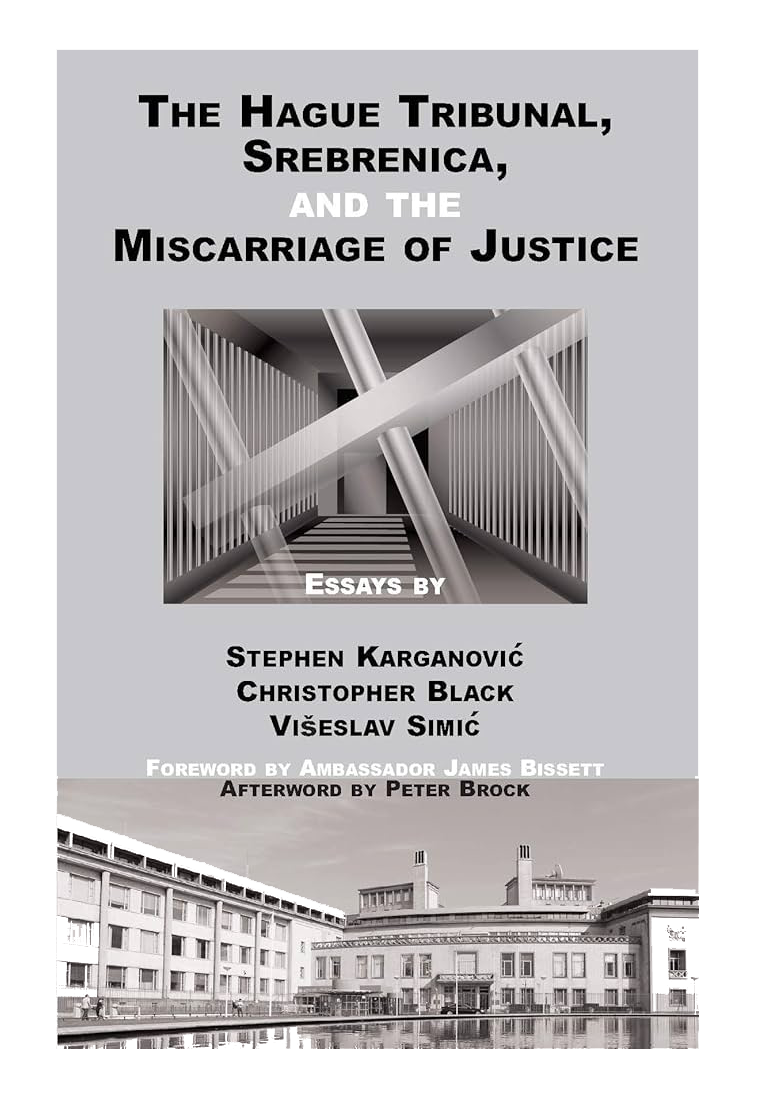
244 pages
ISBN: 978-09709198-7-8
Weight: 10.1 ounces
Four essays that examine the legal shortcomings of The Hague Tribunal. The ICTY and Srebrenica, by S. Karganović is a case study that examines the Branjevo/Pilica Execution Site; The ICTY’s Open Contempt for Justice, by C. Black examines The Hague Tribunal’s willful misrepresentation of evidence in the trial of General Ratko Mladić; Perceptions of Injustice, by Višeslav Simić examines the impact of The Hague Tribunal’s decisions on local co-existence and reconciliation; When Justice Fails is a statistical analysis of The Hague Tribunal’s convictions with respect to bias. Each study presents devastating evidence that The Hague Tribunal was a legally disfunctioning institution that uniformly supported U.S./EU imperialism in the Former Yugoslavia.
Review
This volume is a timely and welcome antidote to the sloppy but comfortable conventional wisdom about Srebrenica. A must read.
—Tiphaine Dickson (quoted from a personal e-mail)
These four powerful essays by renowned experts in international law outline in meticulous detail the extent to which the ICTY has failed in its mission of bringing closure and historical truth to the peoples of the former Yugoslavia. Instead, it has falsified history and presented to the world a mischievously misleading account of the breakup of Yugoslavia and the wars this startling event triggered. At the heart of the ICTY s historical narrative are the events that followed the fall of Srebrenica in July 1995. As the authors explain the ICTY seized on the tragedy of Srebrenica in order to construct a false narrative, one that pits monstrous Bosnian Serbs against angelic Bosnian Muslims. Through the manipulation of questionable forensic evidence and dubious eyewitness testimony in one Srebrenica case after another, the ICTY was able to manufacture a fake history that will help no one but those who are even now laying the ground for future conflicts in the lands that once comprised Yugoslavia. These essays provide a bracing rejection of the view that judicial bodies are uniquely qualified to provide authoritative history.
—George Szamuely, PhD Author of Bombs for Peace: NATO s Humanitarian War on Yugoslavia (quoted from a personal e-mail)
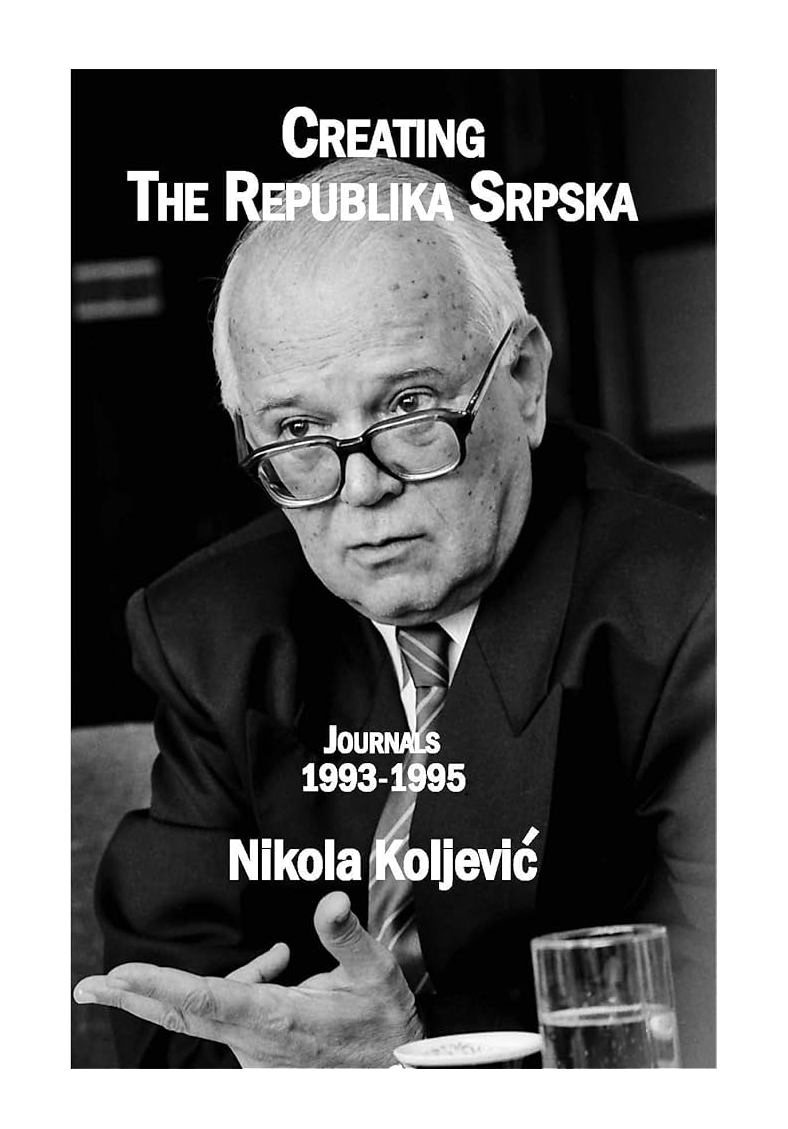
672 pages
ISBN: 978-09709198-4-7
Weight: 1.75 pounds
Nikola Koljević’s Creating the Republika Srpska provides an intimate view of the aspirations, strategies, and point of view of the Bosnian Serbs during their numerous attempts to achieve peace during the Bosnian War. These eloquent memoirs describe what transpired at all the peace conferences from Lisbon to Dayton.
Review
This work will challenge many of the conclusions and perspectives of the war that were built upon the over-engaged and often biased reporting of many journalists and by a host of pop-historians pushed into the spotlight by their bombastic appeals for military intervention based on righteous moralism as well as an utter disregard for the Serbian point of view. The war, its causes and consequences will be debated for many years to come; Nikola Koljević’s testimony as registered on the following pages makes a strong case that the Serbian leadership at the time desired peace and that the obstacles to peace actually were raised by the Bosniak leadership under Alija Izetbegović and from many international actors, including American and European journalists.—from the Introduction by Obrad Kesić and David Binder
About the Author
Nikola Koljević was professor of Shakespearean studies who was elected Vice President of the Republika Srpska (1992–1996). He was a member of the Delegation of the Republika Srpska that participated in all the international peace conferences on Bosnia and he also served as the Chairman of the Committee for Cooperation with the United Nations and International Humanitarian Organizations. His duties in these positions determined much of the content of these memoirs.
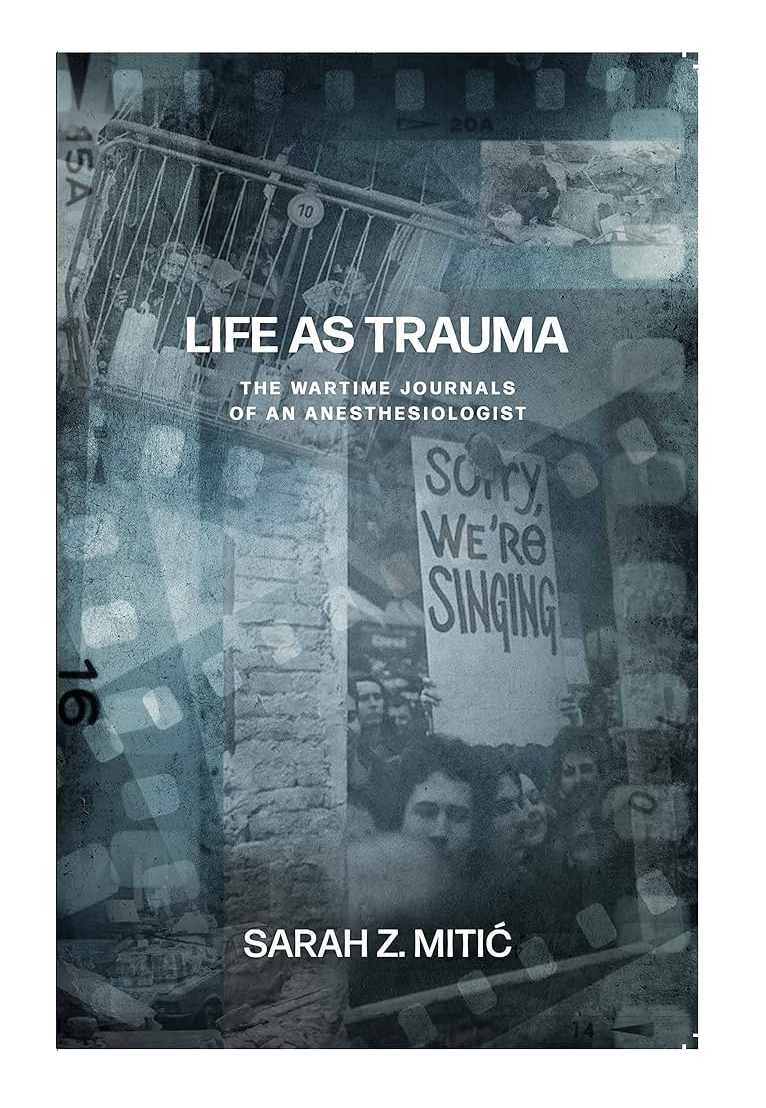
366 pages
ISBN: 978-09709198-6-1
Weight: 1.1 pounds
Dr. Sarah Z. Mitić’s powerful memoir provides eyewitness testimony of the onset of civil war that followed the breakup of the former Yugoslavia. Dr. Mitić proves to be a keen observer of civilians, soldiers, medical personnel, and children who live, work, and serve under conditions of nearly unendurable pressure and unyielding terror.
On a normal day, Dr. Mitić might find herself holding a flashlight for a surgeon during surgery because the hospital is under bombardment and the power has been knocked out; on another, she might find herself face to face with an enemy commando who is pointing a gun at her head in a hospital stairwell.
Throughout the insanity of war, Dr. Mitić upheld the Hippocratic Oath; and the Oath upheld her. Her observations of people living under constant danger lead her to reflect: My life does not have a purpose: it is a struggle for survival. I was exhilarated and over-performed on the front lines. Wherever death forms a black background, life there etches its clear white lines in a foreground figure. This is the only pure, moral act: fighting for life.
Review
A war doctor shares her battlefront journals of aiding military and civilian casualties during the 1990s Balkan wars.
Belgrade-born Serbian physician, anesthesiologist, and debut author Mitić’s time as a trauma physician after the historic breakup of Yugoslavia is on brilliant display in these meticulous journals. Her journey began when she heard about the war in Yugoslavia while vacationing with her husband and two small daughters in Greece in 1991. The people in Krajina are fighting for their lives and they need help desperately, wrote the determined Mitić, who rushed home to Smederevo to make plans to travel to the war-torn region of Knin even though her mother and brother both disapproved. She arrived in Knin the next year and began working immediately at a hospital where the wounded, the dying, and the dead are arriving from all directions. At this early point in Mitic’s powerful narrative, she begins incorporating stories and profiles of the medical rescue staff and of the grisly casualties. As explosions reverberated throughout the region, and civilian anger and confusion at the disintegrating multinational army seethed, she saved lives Croatian children, countless anguished soldiers, a suicidal young mother. Her humanitarian determination kept her working in the hospital despite exhaustion and sleep deprivation. Further travels brought her to a Kosovo clinic, where there was tension with arrogant Albanian staff; and to central Croatia, where life [was] disappearing fast. Mitić struggled to manage casualties while ensuring her own safety, harrowingly depicted in an account of an assault by an agitated sniper. The final section finds the author back at home dealing with a catastrophic personal tragedy. At times, the book’s graphic depiction of violence and bloodshed can be arduous to read. However, Mitić shows a knack for relating vivid details of the wounded, of families suffering, and of her devoted colleagues. She also unflinchingly sketches her own extended family’s haunted history. Readers interested in the strife and unrest of the Balkan region, its divergent politics and populations, and the plights of its refugees will find Mitić’s narrative illuminating.
A commanding chronicle of focused leadership and admirable humanity.—Kirkus Reviews
About the Author
Dr. Sarah Z. Mitić is an anesthesiologist who served as a volunteer on battle fronts in Knin and Glina, and in Priština.
730 pages
ISBN: 978-09709198-0-9
Weight: 2.28 pounds
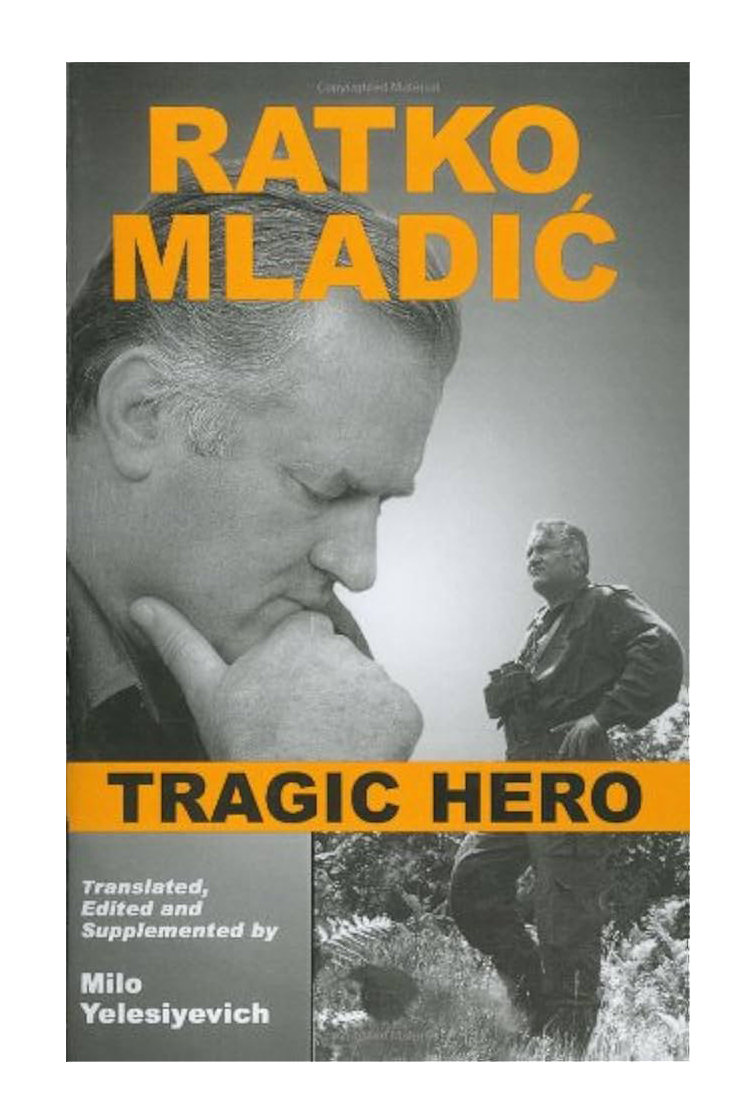
Ratko Mladić: Tragic Hero is the first book-length study to appear in English about the controversial Serbian general. It departs radically from mainstream news coverage of General Mladić because it presumes him to be innocent of charges of war crimes and genocide until he has been proven guilty. Furthermore, Ratko Mladić: Tragic Hero presumes that the West has been acting against its own best interests by supporting Islamic fundamentalist terrorism in the former Yugoslavia, while at the same time attempting to prosecute General Mladić for alleged crimes for which there is still no proof, even after the passage of more than a decade. Genegal Ratko Mladić was the first General to fight Islamic fundamentalism in Europe. Why has he been demonized while others, who have done little or nothing—or who have even aided and abetted the rise of Islamic fundamentalism—have been praised? Ratko Mladic, Tragic Hero consists of an abridgment of Mr. Stojadinovic’s book, Ratko Mladic, Hero or War Criminal? (Evro, Belgrade: 2001) which discusses Mladić’s biography, his successes and failures as a general, the dilemmas he faced as a soldier, and tries to answer the question: how good a general was he? and is he a war criminal? It is followed by Bringing Democracy to Bosnia, by Gregory Elich, a respected journalist whose work has appeared on counterpunch.org and Covert Action, which examines the results of the Dayton Peace Accords in Bosnia, and demonstrates that the West has imposed a dictatorship in Bosnia that benefits only globalists and multinational corporations. Background chapters provide a context for the Bosnian War that the mainstream media has systematically ignored. Bosniacs, Nazi Muslims, Mujahideen, and Bin Laden traces the rise of Bosnian Muslim fascism and its connection to Islamic fundamentalism as exemplified by the Nazi SS Handzar Division during WWII, which was organized by Himmler and Amin al-Husseini, the Grand Mufti of Jerusalem. Alija Izetbegović, former President of Bosnia-Herzegovina, began his career as recruiter for the Handzar Division and acted as a historical link, connecting resurgent Muslim fascism and fundamentalism in Yugoslavia in the 1990s to that of WWII. Ustashi, Murderer Monks, and the Modern Croatian State examines the Ustashi Nazi Puppet state created by Hitler in Croatia during WWII, and the involvement of the Roman Catholic clergy in the administration of the Jasenovac death camp, as well as many others like it. The contemporary Croatian state is shown to be a direct heir to the Croatian Nazi puppet state of WWII. The most controversial chapter is Srebrenica, the Phantom Massacre, which analyzes the alleged “Srebrenica Massacre” and challenges the groundless accusation that “7,000 Muslim men and boys” were killed there. This analysis relies on mainstream news coverage of The Hague Tribunal, the work of independent analysts, and the Srebrenica Report (authored by Darko Trifunović) that was issued by the Republika Srpska in 2002. UN High Representative Paddy Ashdown dismissed this 2002 Report without ever having read it. The analysis argues persuasively that at most about 1,800 armed Bosnian Muslim soldiers died in combat, and that about 100 were killed in summary executions. In other words, there was no massacre—only combat fatalities. Seventy pages of interviews with General Mladic appear in English for the first time, along with appendices that reprint key articles by David Binder, A.M. Rosenthal, Chris Hedges, Kosta Cavoski, and T.W. Carr. The Hague indictment is also reprinted Ratko Mladić: Tragic Hero will contribute to a greater understanding of General Mladić’s role in the Bosnian war that will benefit scholars, historians, journalists and students, as well as Americans who want to take a more critical look at U.S. military adventures overseas. Ratko Mladić is a tragic hero because he fought the rising tide of Islamic fundamentalism and neo-fascism in the Balkans.
440 pages
ISBN: 978-09709198-5-4
Weight: 1.25 pounds
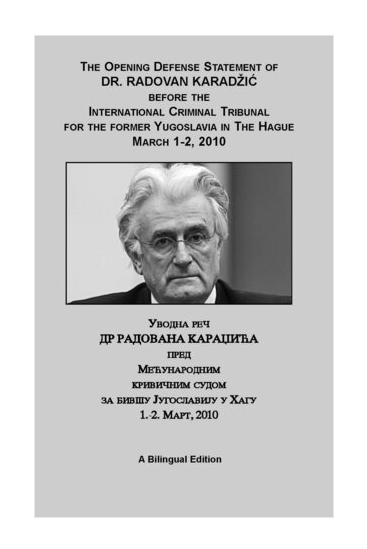
This bilingual edition features a new English translation of Dr. Karadžić’s Opening Defense Statement before the ICTY (International Criminal Tribunal for the Former Yugoslavia) on March 1–2, 2010, and it replaces the inferior and often unintelligible official translation produced by the ICTY.
Dr. Karadžić, former President of the Republika Srpska, defends himself by providing a context for his actions as well as by dismantling the media lies on which the charges against him are based. He concentrates on: the falseness of the charges of his being a member of a Joint Criminal Enterprise; the role of Germany in the break-up of Yugoslavia; the creation of the secret Bosnian Muslim Army (the Patriotic League); Alija Izetbegović’s Islamic Declaration; Karadžić’s consistent efforts to avoid war; the manner in which the SDA (the Muslim political party) usurped control of Bosnian state institutions, including security services and the police force; the Bosnian Muslim reign of terror in Sarajevo; and Dr. Karadžić’s dismantling of a host of charges against him.
The U.S. and NATO used the Bosnian War as a laboratory to test weapons as well as new methods of perception management, which they deployed in a long series of wars. Americans who who no longer believe the U.S. government’s selective presentation of its foreign policy will find much to consider in Dr. Karadžić’s Opening Defense Statement.
Review
Yelesiyevich contends that the official translation, produced during the trial, was woefully inadequate, and that a more faithful rendering of Karadžić’s self-defense gives a fuller, fairer picture of the events as they actually unfolded. The bulk of this book is precisely this translation, which runs alongside the original Serbian version extracted from the official audio record provided by the International Criminal Tribunal. In the brief introduction, the author articulates his own defense of Karadžić and registers his indignation over his public abuse. Karadžić’s defense itself is remarkable, by turns eloquent, historically provocative, and self-aggrandizing. Assuming his account is not merely self-serving revisionism, Karadžić claimed Serbs had long been champions of peace and compromise, but they met an intransigent Muslim faction that all but insisted on either war or submission. Moreover, he contended that the forcible removal of Bosnian Muslims and Croats was never our plan. In many ways, the full account of Karadžić’s defense does add valuable perspective, especially in pointing out that Muslim insurgents were themselves guilty of extraordinary war crimes and that they were often stubbornly unreasonable partners in political dialogue.... This translation remains an important contribution to the understanding of a historically significant war. A fascinating historical document for readers interested in the Balkan wars.—Kirkus Reviews
278 pages
ISBN: 978-09709198-1-6
Weight: 1.05 pounds
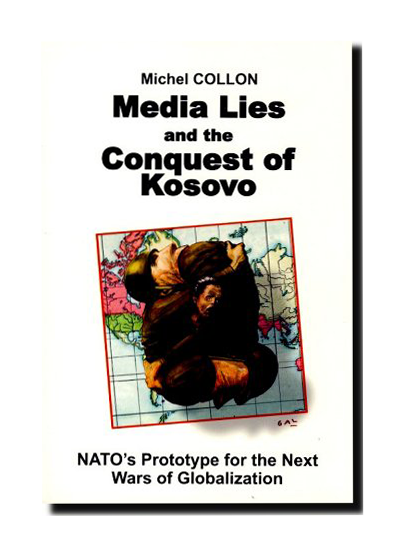
Why can we expect to see more wars? What countries have been singled out to be the next targets? Are Russia and China being threatened? Is the world running the risk of a major conflict? Michel Collon correctly predicted the war against Yugoslavia in his previous book, Liar s Poker (1998). His latest book, Media Lies and the Conquest of Kosovo, examines the Kosovo War as a for-profit venture instead of a humanitarian war. Media Lies and the Conquest of Kosovo is an anti-Globalist handbook, an anti-manipulation manual. Each war begins with media lies. Public opinion must support the troops. Isn’t that so? Are we condemned to always learn the truth too late? No, says Collon, who exposes the principles and devices employed in the Kosovo propaganda war. Massacres, mass graves, ethnic cleansing: how can one disentangle truth from falsehood in these shocking images? And what is being concealed from us by the terms blunders and collateral damage ? In Yugoslavia, did NATO really bomb the Chinese Embassy, two refugee columns, an international train, the market and the hospital in Niš, and numerous other civilian targets by accident? These questions must be answered in order to understand the true objectives of the Great Powers. And in order to avoid being deceived by the media into supporting the next illegal war of aggression. For the past twelve years, Michel Collon has been studying the Global War that the U.S. has been conducting in order to dominate and recolonize the planet. His books and films have unmasked the clandestine rivalry between the US and the EU, specifically, their battle to control black gold, a strategic raw material that must not fall into the hands of rivals: Whosoever wishes to rule the world must control the oil. All the oil. No matter where it is.
Serbian Classics
Dedicated to classic Serbian Literature in english translation
170 pages
ISBN: 978-09678893-5-1
Weight: 7.2 ounces
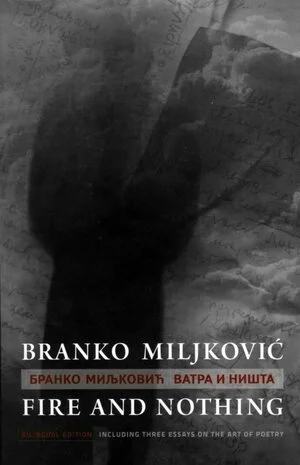
Branko Miljković, one of the greatest Serbian lyric poets of the mid-twentieth century, remains an enigma fifty years after his death. He was born in 1934 near Niš in southern Serbia. His genius, recognized at an early age, matured to write poetry that restored magic and mystery to the world. He cast a spell with the simplest words, created the great drama of being, fire, and nothingness, and invested his verse with unfathomable majesty.
Miljković referred to himself as a Neo-Symbolist, and continued where his mentors left off. Mallarmé, the poet to whom he felt the closest affinity, longed to put the entire world into a single volume of poetry: L'oeuvre, Le Grande Oeuvre, comme disaient les alchimistes, nos ancestres. Since Mallarmé’s Le Grand Oeuvre remained unrealized, Miljković, supremely confident of his vocation, worked with the patience of an alchemist to create l'explication orphique de la Terre, qui est le seul devoir du poete et le jeu litteraire par excellence that Mallarmé had envisioned.
Symbolism and Surrealism had both disappointed Miljković because he believed an important task had been left undone. He prepared to explore terra incognita by synthesizing the two movements, a mad attempt to create a poetic microcosm of the universe by tackling metaphysical themes with concrete imagery, paradox, intuition, and prophetic language.
Miljković did succeed in restoring poetry to the center of communicative discourse. His verse quickly entered the national consciousness, as if his simple, startling words had always existed at the end of the rainbow, but had only just now been spoken for the first time.
Review
Although not fully replicated in the English translation, the translator seems to have done as fair of a job as possible in capturing the essence of Miljković’s lines/symbols without resorting to ossifying the freeness of the original verse with a stilted translation. When I originally wrote this short review back in July on Gogol’s Overcoat (http://gogolsovercoat.com/?p=308), I had only read only about a fifth of the poems. What I said then was that Miljković reminded me favorably of those few poems of Mallarmé that I had read in French or English translation. Having finished the entire collection in the interim, what I can briefly add here is that the second half of the collection is perhaps even stronger than the very good first half. Miljković is not a poet whose imagery and themes can be easily grasped in a single reading; it is doubly difficult when one only reads his native language at an elementary level and the parsing of the bilingual text ends up being halting and hesitant. But sometimes it is worth the effort to wrest meaning and understanding from the text and in the case of Miljković’s poems, the intrepid reader is rewarded for her effort, especially if s/he revisits the collection after an interval and begins almost anew. Vaguely Borghesian (09/11/2012)
About the Author
Branko Miljković was born on January 29, 1934 in Gadžin Han, which lies just outside of Niš in southern Serbia. He began publishing poems in literary reviews when he was sixteen years old. He was studying Philosophy at the University of Belgrade when he published his brilliant first volume of poetry, I Wake Her in Vain (1957), which established his reputation.
Miljković won the prestigious October Prize in 1960 for Fire and Nothing, but renounced his poetry only a few months later. He was found dead on February 11, 1961 in a park on the outskirts of Zagreb. His death was officially declared a suicide by the Croatian police, even though forensic evidence indicated murder. The circumstances of his death are still disputed today.
He was drawn by temperament to the Russian poets Mayakovsky, Blok and Briusov as well as to Mallarmé and the French Surrealists, whose poems he translated.
All the true formulas in the world are poetic. I often look into Einstein's formulas and I believe that they can be translated into verse. Contemporary physics can take a verse of Baudelaire for its epigraph: Man's journey leads through a forest of symbols. My formulation: Words are a mighty framework and vessel for and of the world. Everything that takes place on earth occurs as well in language and symbol, whether it concerns atoms or stars.—Branko Miljković
——————————————————————————
from Consciousness of the Poem
I’m not ashamed of anything anymore.
The sun has set on the world. The desired fruit will erupt
With night. A voice dreaming of itself finds treasure,
A distant wall where my ship has been bricked up.
I guard my pride in that wall, I sing
More beautifully — than I do free — immured.
Where do I get the strength to resist my being,
When vines cannot resist, nor the fertile vineyard!
To live without the self: a strange desire?
To want a poem without a poet? Time,
From the oblivious past, does it admire
The betrayal of my thwarted design?
Does that mean saying to change: Not for
Me! And let the poem change itself? Furthermore
To dedicate myself to beast and flower
And lend my strength to black roots’ hunger?
I’m not ashamed to sing behind a wall
Better in such night than free elsewhere.
The sun stings my heel. The blazing wall
At the end of the road — it leads nowhere.
134 pages
ISBN: 978-09834736-1-9
5.9 ounces
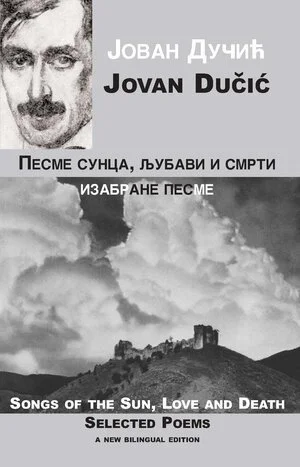
This revised edition offers a new English translation of Jovan Dučić’s poetry.
Dučić appeared at the turn of the century, a crucial point in the history of Serbian Literature when the era of Romantic and Realist poetry was coming to an end and another, Modernism, was just beginning. By introducing new themes and sources of inspiration, Dučić was instrumental in setting Serbian poetry on a new course. He was an aesthete who possessed a cultivated and refined taste as well as an aristocratic spirit. He is the foremost practitioner of l’art pour l’art in Serbian Literature. In his poetry, he strove for formal excellence expressed through clarity, precision, elegance, musical quality, and imagery. His subject matter and unique style reflect the manner of French verse Parnassian, Symbolist, Decadent. Unlike previous Serbian poets who were either romantically or realistically oriented, Dučić was attracted to esoteric, sophisticated, thought-provoking, and soul-searching themes, so he created his own imaginary world and reacted to it. His poetry reveals an artist with an essentially pessimistic disposition, for which he has sometimes been criticized; it also reveals his embrace of art for art’s sake. His supreme craftsmanship, however, is undeniable.
About the author
Jovan Dučić (1871–1943) was a Serbian poet-diplomat. He is the most influential Serbian modernist poet of the first half of the twentieth century
——————————————————————————
A WILLOW BY THE SEA
The top of the world is a willow by the sea,
Its plaited leaves are long, green, fanned,
Resembling a nymph who has been damned
To become a rustling, melancholy tree.
She hears the mountain song at sunrise,
The sea’s agony in silent evenings.
She’s transfixed amid promiscuous things:
Clouds and wind, and waves and time.
And she whispers to them, slowly yielding
A leaf to the wind, a branch to the sea,
And like a heart being torn apart, breaking,
Sadly rustling with life. A willow by the sea....
158 pages
ISBN: 978-09678893-3-7
Weight: 8 ounces
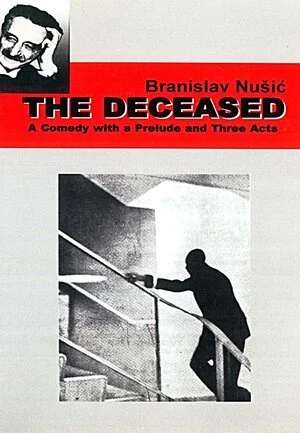
The Deceased is Serbia’s most famous comedy written by it’s best-known comic playwright. Pavle Marić, an architect, is furious with his wife because she is conducting an affair with Milan Novaković, his best friend and business partner. Pavle leaves town to think things over. Weeks later, a deformed corpse is found washed up on the banks of the Danube and is identified to be that of Pavle. The case is judged a suicide. Three years later, Pavle, now “the deceased,” unexpectedly returns. He discovers that his heirs have not only plundered his estate, but also refuse to recognize him as being “legally” alive, and they unite to keep him “dead” to maintain the status quo. This is the first English translation of a masterful and darkly comic play that will enter its rightful place as a classic of world literature. The fluid and natural translation lends itself to theatrical production. Comically absurd, filled with existential angst, it was ahead of its time in 1937. At once vaudevillian and modernist, it is distinguished by clever plotting and stinging dialogue. The play stands as a lasting and caustic satire of human greed, strangely consonant with today’s society.
About the Author
Nušić studied law in Graz and in Belgrade, and participated as a volunteer in the Serbian-Bulgarian War (1885). In 1887, he was sentenced to two years of imprisonment because of an anti-dynastic poem he had written, Two Slaves (Dva Raba), but was granted clemency after having served one year of his sentence. Upon his release, the young rebel was surprised to find himself in financial straits, and ironically enough, was compelled to seek employment with a government agency. Appointed as a civil servant, he was sent to the Serbian consulate in Priština (1889). In November 1936, Nušić suffered a heart attack. Doctors worked around the clock to save his life while newspapers prepared his obituary. Nušić, however, not only pulled through, but went on to write The Deceased (Pokojnik), his greatest play. Shortly before his death on January 19, 1938, Nušić wrote to Stevan Brakus, the manager of the National Theatre in Sarajevo, about the Belgrade premier of The Deceased: “My fate is strange. The Left will not recognize me as a writer, and they say that I am a ‘bourgeois blabbermouth’, a trifler and nothing more; and the Right counts me among the Communists, and I—I am neither part of the Right of the Left. Perhaps that is my mistake.”
160 pages
ISBN: 978-09834736-3-3
Weight: 14.4 ounces
Ever since Serbs began to arrive in the United States of America in the early nineteenth century in the person of George Fisher (also known as Djordje Shagich), they have distinguished themselves in politics, the arts, the sciences, entertainment, literature, and sports. They made many significant contributions, especially to literature, during three waves of immigration (pre-World War I, post-World War II, and after disintegration of Yugoslavia in the 1990s).
These articles were originally published in the American Srbobran, two hundred of them from December 5, 2000 to October 21, 2009. The writers represented here hail from all fields: political science, social science, autobiography and, most of all, poetry and fiction. The authors included in this volume were either born in the United States, immigrated to, or spent a considerable amount of time in the U.S. Undoubtedly, many more writers could have been included, but considerations of space have limited the choice. This lexicon offers a sound overview of their contributions to both Serbian as well as American Literature. A balance between writers born in Serbia and those born in the U.S. has been struck. Brief biographies of the writers, along with an assessment of their work, are followed by excerpts.
About the Author
Vasa Mihailovich (1926–2015) was Professor Emeritus at the University of North Carolina. He taught Slavic Languages and Literature at the University of North Carolina at Chapel Hill until retirement in 1995. He published books of prose poems and three books of short stories in Serbian, as well as two volumes of haiku poetry. He has also edited or co-edited numerous anthologies.
128 pages
ISBN: 978-0967889313
Weight: 6.4 ounces
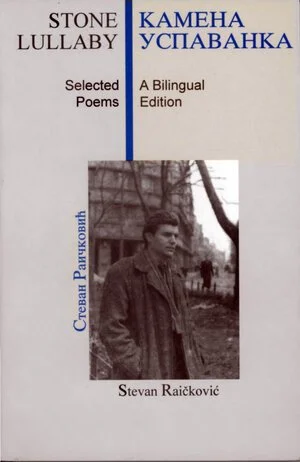
Stone Lullaby is a bilingual edition of a selection of Stevan Raičković’s best known poems. Raičković (1928–2007) is one of the most important poets writing in Serbia today. In the early 1950s, he quickly broke into the first ranks of modern Serbian poetry with his vibrant poems and extraordinary melodic solutions to the problems of versification. The fundamental nature of Raičković’s poetry is spontaneity: resonant and melodic, the poems are frequently written in the manner of a confession or a personal letter sent to a loved one.
——————————————————————————
THE PEOPLE AWAKE UNARMED
People enter their homes. They open memory boxes.
They shut their windows.
Then a little later
They peek
Through the curtains into the asphalt street
at swaying circles of light
Thrown by some lamp.
Beyond the river
People go into mud shacks.
Their backs are slightly bent.
They are listening
To something above their brows
The already
Faint
Play of wind and reeds.
On the trampled grass
Between settlement and town, whose names are riddles
Posed by someone,
Soldiers
Dark from dreaming
Stack their rifles in pointed pyramids.
They enter tents with their heads lowered as though|
they are bowing.
Anyhow
All around
Birds are turning into leaves.
Snakes successfully imitate cracks in tree bark.
Water and fish bypass each other
Each to its own dream.
The wind has stretched its transparent skin
across the sloping hills
Whose profile melts in the dark air.
Under the heavens
An interrupted recollection flows once again from
its roots
Each on its own pillow.
Then slowly
The stars signal a metamorphosis with the usual signs
And invisibly
Quietly exchange roles behind the scenes.
Leaves are transformed into birds.
Snakes and fissures move, each to its own flower
Each flower to its sun.
We already know what air is
And is not.
It is a mountain in its evident security.
The wind has come unglued and starts
Its uncertain millimeter.
Otherwise
All around
Under sheet metal roofs
Under grass roofs or roofs of whistling marsh reeds
Behind transparent glass beginning to light up
Within the stone torso of walls striped
with bands of dreams and whitewash
The eyes of the living are opening.
They are small
Innocent circles once again.
The moment is brief and must be seized by the reins.
The people awake unarmed.
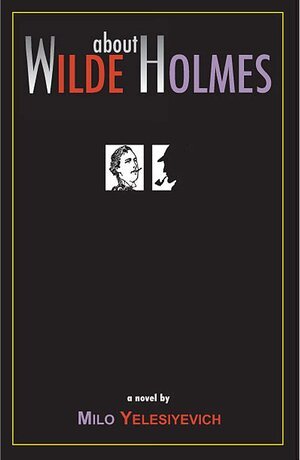
ISBN: 978-09709198-2-3
Weight: 13.6 ounces
Sherlock Holmes, in the absence of Dr. Watson presses Oscar Wilde into his service to help protect candidate Grover Cleveland from a sexual scandal in the 1884 U.S. presidential election, but everything goes wrong. Oscar Wilde proves to be Holmes intellectual equal; Professor Moriarty is the villain; and Lillie Langtry is the woman at the bottom of it all. Can Sherlock Holmes redeem himself and solve the story's mystery perhaps even the mystery of himself?
Review
In Wilde about Holmes, Yelesiyevich has managed to combine the archness of the aesthete with the sober ratiocination of the master sleuth Sherlock Holmes in a boisterous tale of murder, mystery, and mayhem in Old New York. Surrounded by the swirl of the Guilded Age, Oscar Wilde and Sherlock Holmes join forces to defeat archnemesis Professor Moriarty in his attempt to derail Grover Cleveland's presidential campaign. As readers we must navigate the rocky shoals of blackmail, skullduggery, illicit love affairs, political corruption, bad disguises, overeating, and wayward thespians. Narrating alternately in the voices of Wilde and Holmes, Yelesiyevich seamlessly interweaves the attitudes and mannerisms of two of the nineteenth century's most characteristic and best-known authors. Utterly convincing and supremely ambitious, this sly, clever, witty novel manages to simultaneously delight and mystify readers. For all its surface sparkle and flair, this is a surprisingly cerebral novel that is also an homage to its characters and the world that brought them forth. It would be hard to overpraise a book that so richly brings together psychological acuity with the forward momentum of a crime novel.
Robert Bononno, Translator of The French New Wave, by Jean Douchet (1999)—Back Cover Blurb
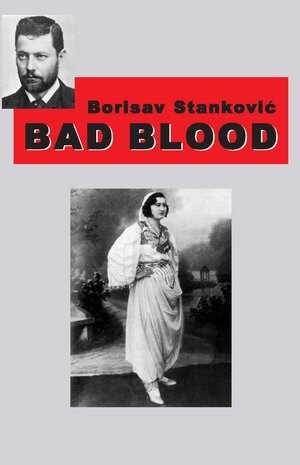
246 pages
ISBN: 978-0967889344
Weight: 10.7 ounces
Borisav Stanković’s classic novel, Bad Blood (1910), tells the tragic story of Sofka, a woman of otherworldly beauty, who marries a twelve-year-old boy in order to save her family from financial ruin. Bad Blood is regarded as the first Serbian psychological novel, and it left a profound influence on writers as diverse as Meša Selimović and Ivo Andrić.
Reviews
Borisav Stanković’s Bad Blood is the first true modern psychological novel written in Serbian. It depicts people, customs, and ways of life in southern Serbia following the liberation from the centuries-long Ottoman yoke in 1875. The most striking feature of the novel is its female protagonist, Sofka. At the time when women in literature were represented mostly as stereotypes, Stanković created Sofka as a full human being. Stanković was the first Serbian writer to introduce eroticism in his portrayal of Sofka. Milo Yelesiyevich should be commended for bringing this masterpiece of Serbian Literature to English-speaking readers.
Radmila J. Gorup, Columbia University, New York—Back Cover
Of all of the writers at the turn of the nineteenth into the twentieth centuries, no other is more revolutionary and exciting than Bora Stanković. A native of southern Serbia, where the Turkish influence lingered longer than elsewhere, he delved psychologically into the most intimate relationships between the people of Vranje, a colorful town in his native region. The most notable of these is the relationship between Gazda-Marko and his beautiful daughter-in-law, Sofka, both of whom are consumed by sexual desire a forbidden fruit. Stanković’s attacks on the entrenched prejudices in his society made him both criticized and admired at the time when Serbian literature was shifting from realism to modernism. His lyrical style and down-to-earth language fit the subject matter perfectly, making Bad Blood the most-read novel in Serbian literature to this very day.
Vasa D. Mihailovich University of North Carolina, Chapel Hill (Emeritus)—Back Cover
About the Author
Borisav (Bora) Stanković (1876–927) was born into a family that was once wealthy, but had long since fallen on hard times. His father died when he was five, and his mother when he was seven. He was raised by his grandmother, who enchanted him with stories from Vranje’s past; these tales became the source of most of his short stories and novels.
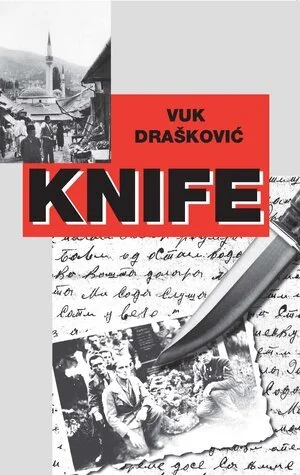
440 pages
ISBN: 978-09678893-6-8
Weight: 1.33 pounds
When Alija Osmanović, a Bosnian war orphan who is the protagonist of Knife, goes in search of the identity of his murdered birth-parents, a sense of thwarted justice motivates him, and expresses itself as burning passion for revenge. This is summed up by the novel's title.
The opening chapter describes the massacre of a Serbian village by Muslim Ustaše on Christmas Day (January 7) of 1942. The sole survivor is a newborn male infant, spared at the last moment and given to a Muslim woman who lost her husband in the raid. The boy is named Alija, and is raised as a Muslim, and later comes to believe that his family was killed by Serbs. Twenty-one years later, Alija, now a medical student in Sarajevo, discovers that the newspapers are interested in his story. An article about him is published in a Sarajevo daily, and he begins receiving mail. Most of it is sympathetic but unhelpful, although he does receive an enigmatic letter which reads: You are certainly not what you are, nevertheless, you are what you are not. Alija seeks out Sikter Effendi, an eccentric and reclusive Muslim cleric, to help him interpret the enigma. Sikter Effendi, an irascible outsider, is, nevertheless, considered to be honest, because he has suffered at the hands of each regime: Ustaše as well as Communist. He has responded by developing a fine sense of disgust for the human race, and he steeps himself in history, trying to untangle the threads of misfortune. But when Alija enters the Effendi’s life, a transformation occurs. Sikter Effendi finds a spiritual heir. Through Sikter Effendi s mentorship, Alija discovers the truth: that his heritage is Serbian; that he was born not far away but in the neighboring village; and that his adoptive family was guilty of murdering his birth-family. A crisis of identity ensues. Each possible course of action open to him is bad. How is he to go on?
Review
Knife is an ambitious political melodrama that explores the conflicted psyches of two protagonists bent on revenge against their parents' murderers: student Alija Osmanović, who discovers he shares a troubling kinship with those he considers his bitterest enemies; and Milan Vilenjak, the Javert-like pursuer of a despicable war criminal, Atif Tanović, who to Milan’s frustration, proves a man of conscience and a genuine penitent. The story ... has real power — and the complex, suffering figure of Tanović has an almost Dostoyevskian intensity. A fine start for SCP [The Serbian Classics Press], and a hopeful indication that more of the literature of the Balkan countries may be reaching us soon.
—Kirkus Reviews July 15, 2000
About the Author
Vuk Drašković is Serbia's most controversial novelist. Knife (1982), his second novel, was banned by Communist authorities. Drašković abandoned literature in the early 1990s to form an opposition political party called The Serbian Renewal Movement to introduce democracy to Yugoslavia. He served briefly as Deputy Minister of Foreign Affairs from January until April 1999, when he was dismissed for suggesting that UN troops could monitor a peace agreement in Kosovo. He survived an assassination attempt in October 1999 in which four of his aides were killed. He also served as Serbia's Minister of Foreign Affairs (2003–2007).
Knife is the first of Drašković’s novels to appear in English.
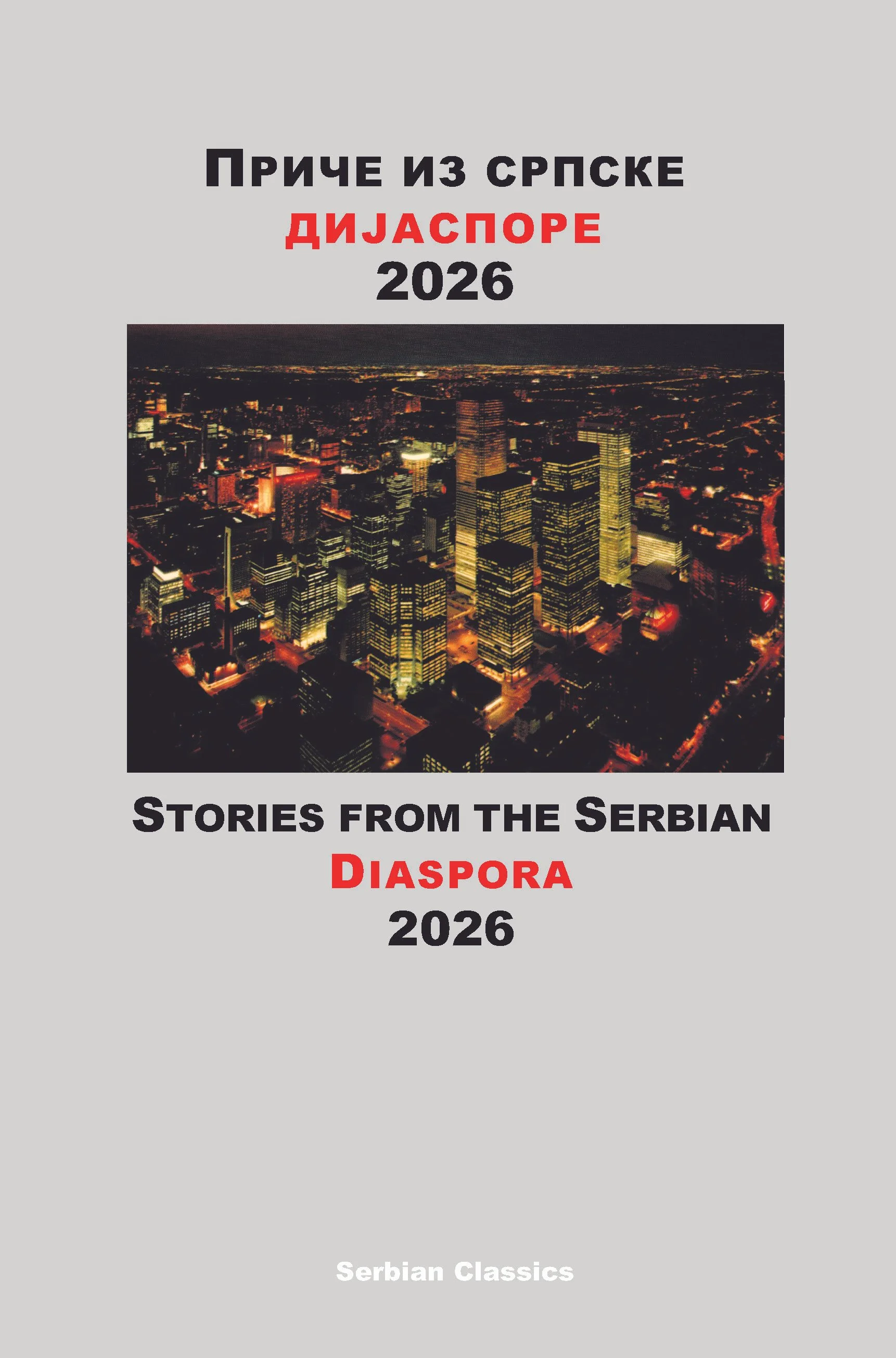
56 pages
ISBN: 978-0-9834736-5-7
Weight: 4 ounces
Stories from the Serbian Diaspora 2026 presents the winners of the second Serbian Classics Short Story Contest, which will be held yearly in order to choose the best short stories about Serbian life from the global diaspora. The winners of the 2026 contest were from Canada, Switzerland, and the U.S., so these stories are written in both Serbian and English.
The Serbian Classics Short Story Contest 2027 will begin accepting submissions on June 1, 2026. The deadline is December 31, 2026. Submission guidelines may be found on the Contest page here.
Serbian Classics has been publishing translations of Serbian Literature in English for twenty-five years in order to present essential Serbian writers who have been overlooked in English translation: Borisav Stanković, Vuk Drašković, Branko Miljković, Stevan Raičković, Branislav Nušić, and Jovan Dučić.
Конкурс под називом Serbian Classics Short Story Contest 2026 на ком су учествовали српски писци који стварају у дијаспори, објављује победнике из 2026. године. Намера нам је да сваке наредне године објављујемо конкурс са циљем да подстакнемо и подржимо српске писце који у својим причама пишу о домовини или о животу у иностранствy, у циљу очувањa српске културе у дијаспори. Учесници на протеклом конкурсу су српски писци који живе и раде у Канади, Америци и Србији, а победници су добили награде и њихове приче објављујемо. Пријављене приче на конкурс су написане и на српском и на енглеском језику.
Овом приликом објављујемо конкурс Serbian Classics Short Story Contest 2027, за кратку причу српских писаца за наредну 2026. годину. Пријаве можете слати од 1. јуна 2026. године, а датум затварања конкурса је 31. децембар 2026. године. Пропозиције конкурса се налазе овде.
У оквиру едиције Serbian Classics већ 25 година објављујемо преводе српских класика из српске књижевности на енглески језик како би представили значајне српске писце и енглеском говорном подручју: Борисав Станковић, Вук Драшковић, Бранко Миљковић, Стеван Раичковић, Бранислав Нушић и Јован Дучић.
364 pages
ISBN: 978-09709198-9-2
Weight: 14.9 ounces
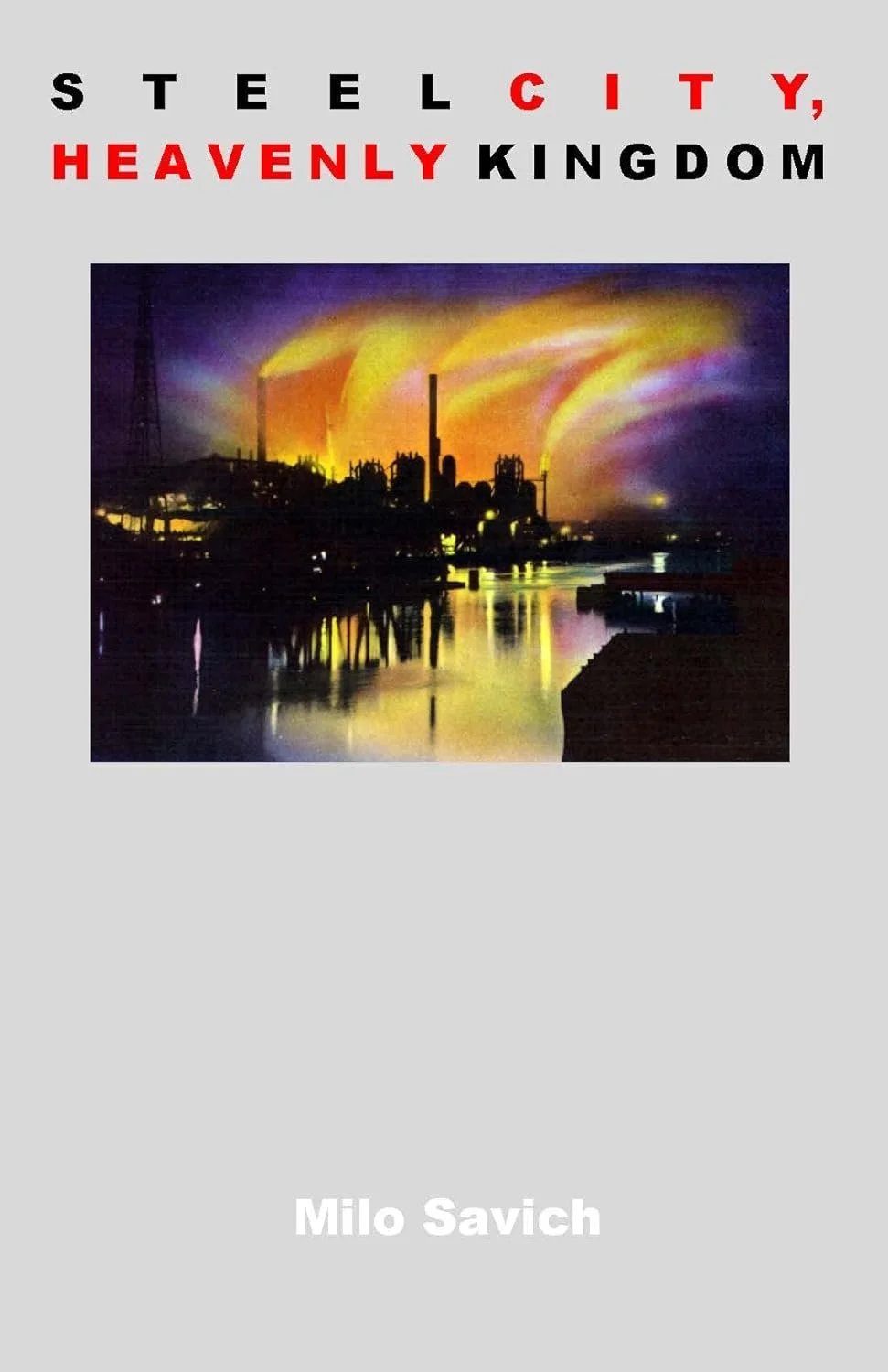
Nine stories about a Serbian immigrant steelworking community in South Chicago that span a generation, from the 1950s to the 1980s when the steel industry collapsed. The stories are written in English, Serbian, French, and Latin, which mimic the blind spots an the ordinary reader encounters in a multilingual environment; however, the reader's not-knowing plays an integral part in the narration. Beneath the veneer of linguistic realism, different streams of history, represented by 600 etymologically related words across the four languages, collide and animate the inner lives of the characters. A traumatized child, a high school dropout, an abused immigrant housewife, a college student who flees to Paris, a work-hard play-hard young attorney, an out-of-work shop steward angling for a precinct captain's job, and others relate the life and death of the neighborhood in an ever-expanding spiral of implication and moral responsibility. Multilingual fictional, at least in Chicago, may take different forms: English, Polish, German, and Greek; English, Spanish, Italian, and Russian; English, Chinese, Yiddish, and Hindi; etc. Other parts of the country would yield different combinations; yet the dynamic would remain the same. Steel City, Heavenly Kingdom is unmatched in contemporary fiction for innovation and boldness of conception. Each story dares to take a death-defying leap into the multilingual world, and it returns with a vision of America that we have never seen before — uncompromising, maddening, enigmatic, and enlightening.
46 pages
ISBN: 978-0-9834736-4-0
Weight: 4 ounces
Stories from the Serbian Diaspora 2025 presents the winners of the first Serbian Classics Short Story Contest, which will be held yearly in order to choose the best short stories about Serbian life from the global diaspora. The winners of the 2025 contest were from the U.S., Canada, and Serbia, so these stories were written in both Serbian and English. Contest rules may be found here.
Serbian Classics has been publishing translations of Serbian Literature in English for twenty-five years in order to present essential Serbian writers who have been overlooked in English translation: Borisav Stanković, Vuk Drašković, Branko Miljković, Stevan Raičković, Branislav Nušić, and Jovan Dučić.
Конкурс под називом Serbian Classics Short Story Contest 2026 на ком су учествовали српски писци који стварају у дијаспори, објављује победнике из 2025. године. Намера нам је да сваке наредне године објављујемо конкурс са циљем да подстакнемо и подржимо српске писце који у својим причама пишу о домовини или о животу у иностранствy, у циљу очувањa српске културе у дијаспори. Учесници на протеклом конкурсу су српски писци који живе и раде у Канади, Америци и Србији, а победници су добили награде и њихове приче објављујемо. Пријављене приче на конкурс су написане и на српском и на енглеском језику. Пропозиције конкурса се налазе овде.
У оквиру едиције Serbian Classics већ 25 година објављујемо преводе српских класика из српске књижевности на енглески језик како би представили значајне српске писце и енглеском говорном подручју: Борисав Станковић, Вук Драшковић, Бранко Миљковић, Стеван Раичковић, Бранислав Нушић и Јован Дучић.
92 pages
ISBN: 978-1737470939
Weight: 7 ounces
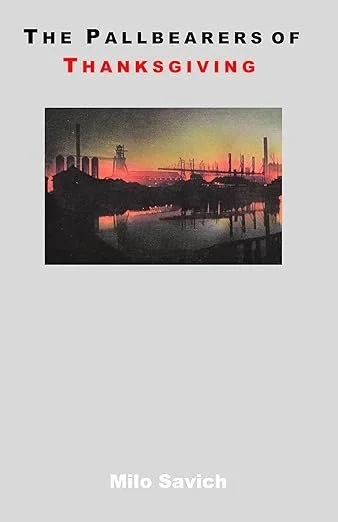
Arresting novel of the struggles of laid off steelworkers in 1980s America. (BookLife) A group of steelworkers from Wisconsin Steel on the south side of Chicago organize a Thanksgiving Day demonstration in 1983 in order to call attention to their plight after the mill was suddenly shut down. Their gimmick is a coffin that the demonstrators will carry which represents “the death of the American steelworker.” The Pallbearers of Thanksgiving first appeared in the collection Steel City, Heavenly Kingdom.
Review
“Dey’re actin’ like dey can get away wid anything,” a steelworker declares in this arresting, outrage- and dialect-driven novel of labor set in South Chicago in the early 1980s. Savich (Wilde About Holmes) dramatizes the fight of workers against Wisconsin Steel, which abruptly shut down plants early in the Reagan era, denying laid-off workers promised benefits. Mike Lazich, a shop steward, has worked hard planning a demonstration on Thanksgiving Eve with the idea of carrying a coffin symbolizing the death of the American steelworker. As the workers gather, Mike is apprehensive as he is aspiring for the precinct captain’s job. A television crew films the proceedings, but the evening news is a nasty surprise to him and the demonstrators as it features Bobby B, a local lawyer and politician, and not Mike, as the savior. Savich’s searing prose captures the rough life of the steelworkers with wry humor and compassion, especially their struggles, camaraderie, and feelings of betrayal. The characters are all well-etched, complex, and true to life, and their talk is funny, bleak, pained, and convincing, though the choice to phonetically recreate accents may give some readers pause. Like Mike and his disturbed Vietnam vet brother Bronx, these creations and lives linger in the mind after the last page: the perceptive, bookish Jan Polski; Gino, who loses an arm in an accident; Javi, whose wife turns to drastic measures to pay the bills. The introduction of real-life union leader Frank Lumpkin into the narrative bolsters the prevailing sense of authenticity. Savich uses the coffin as an effective symbol of both the end of an era for American labor but also the persistent possibility of death. Companies have scant regard for the lives of steelworkers, saving costs by neglecting maintenance and denying benefits. The cast’s offhanded discussion of horrible accidents is just one example of the grim realities that Savich’s accomplished story lays bare.—BookLife