 Image 1 of 1
244 pages
ISBN: 978-09709198-7-8
Weight: 10.1 ounces
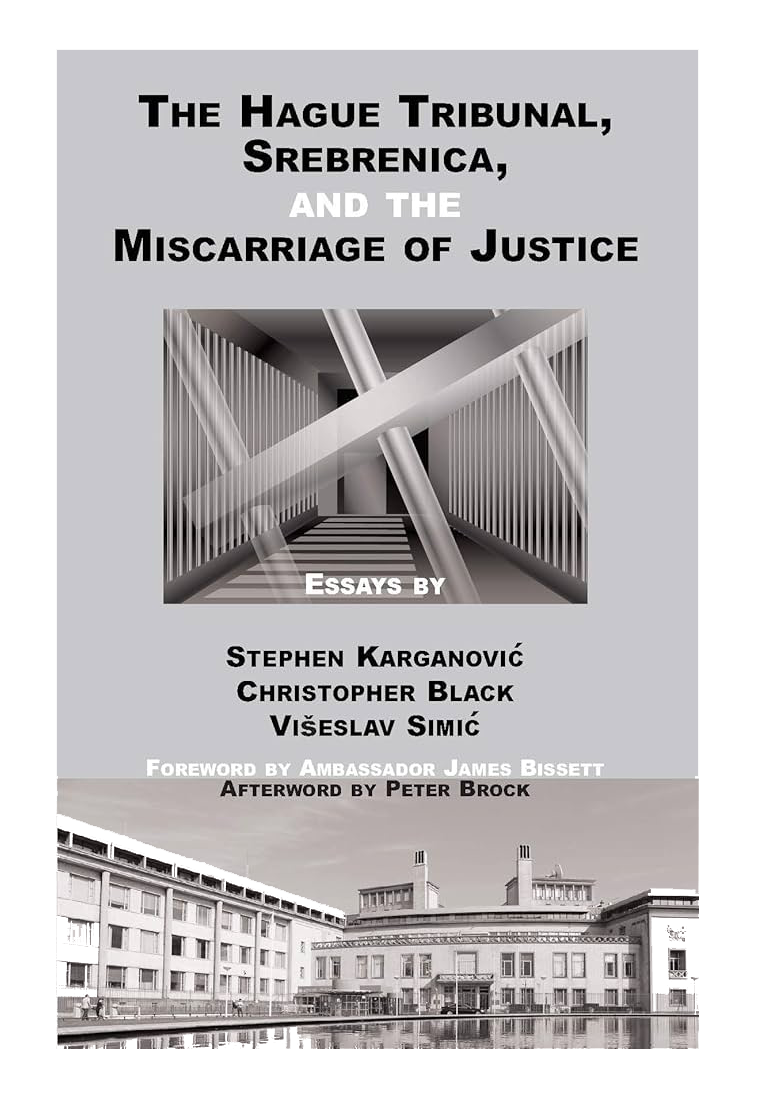
Four essays that examine the legal shortcomings of The Hague Tribunal. The ICTY and Srebrenica, by S. Karganović is a case study that examines the Branjevo/Pilica Execution Site; The ICTY’s Open Contempt for Justice, by C. Black examines The Hague Tribunal’s willful misrepresentation of evidence in the trial of General Ratko Mladić; Perceptions of Injustice, by Višeslav Simić examines the impact of The Hague Tribunal’s decisions on local co-existence and reconciliation; When Justice Fails is a statistical analysis of The Hague Tribunal’s convictions with respect to bias. Each study presents devastating evidence that The Hague Tribunal was a legally disfunctioning institution that uniformly supported U.S./EU imperialism in the Former Yugoslavia.
Review
This volume is a timely and welcome antidote to the sloppy but comfortable conventional wisdom about Srebrenica. A must read.
—Tiphaine Dickson (quoted from a personal e-mail)
These four powerful essays by renowned experts in international law outline in meticulous detail the extent to which the ICTY has failed in its mission of bringing closure and historical truth to the peoples of the former Yugoslavia. Instead, it has falsified history and presented to the world a mischievously misleading account of the breakup of Yugoslavia and the wars this startling event triggered. At the heart of the ICTY s historical narrative are the events that followed the fall of Srebrenica in July 1995. As the authors explain the ICTY seized on the tragedy of Srebrenica in order to construct a false narrative, one that pits monstrous Bosnian Serbs against angelic Bosnian Muslims. Through the manipulation of questionable forensic evidence and dubious eyewitness testimony in one Srebrenica case after another, the ICTY was able to manufacture a fake history that will help no one but those who are even now laying the ground for future conflicts in the lands that once comprised Yugoslavia. These essays provide a bracing rejection of the view that judicial bodies are uniquely qualified to provide authoritative history.
—George Szamuely, PhD Author of Bombs for Peace: NATO s Humanitarian War on Yugoslavia (quoted from a personal e-mail)
244 pages
ISBN: 978-09709198-7-8
Weight: 10.1 ounces
Four essays that examine the legal shortcomings of The Hague Tribunal. The ICTY and Srebrenica, by S. Karganović is a case study that examines the Branjevo/Pilica Execution Site; The ICTY’s Open Contempt for Justice, by C. Black examines The Hague Tribunal’s willful misrepresentation of evidence in the trial of General Ratko Mladić; Perceptions of Injustice, by Višeslav Simić examines the impact of The Hague Tribunal’s decisions on local co-existence and reconciliation; When Justice Fails is a statistical analysis of The Hague Tribunal’s convictions with respect to bias. Each study presents devastating evidence that The Hague Tribunal was a legally disfunctioning institution that uniformly supported U.S./EU imperialism in the Former Yugoslavia.
Review
This volume is a timely and welcome antidote to the sloppy but comfortable conventional wisdom about Srebrenica. A must read.
—Tiphaine Dickson (quoted from a personal e-mail)
These four powerful essays by renowned experts in international law outline in meticulous detail the extent to which the ICTY has failed in its mission of bringing closure and historical truth to the peoples of the former Yugoslavia. Instead, it has falsified history and presented to the world a mischievously misleading account of the breakup of Yugoslavia and the wars this startling event triggered. At the heart of the ICTY s historical narrative are the events that followed the fall of Srebrenica in July 1995. As the authors explain the ICTY seized on the tragedy of Srebrenica in order to construct a false narrative, one that pits monstrous Bosnian Serbs against angelic Bosnian Muslims. Through the manipulation of questionable forensic evidence and dubious eyewitness testimony in one Srebrenica case after another, the ICTY was able to manufacture a fake history that will help no one but those who are even now laying the ground for future conflicts in the lands that once comprised Yugoslavia. These essays provide a bracing rejection of the view that judicial bodies are uniquely qualified to provide authoritative history.
—George Szamuely, PhD Author of Bombs for Peace: NATO s Humanitarian War on Yugoslavia (quoted from a personal e-mail)